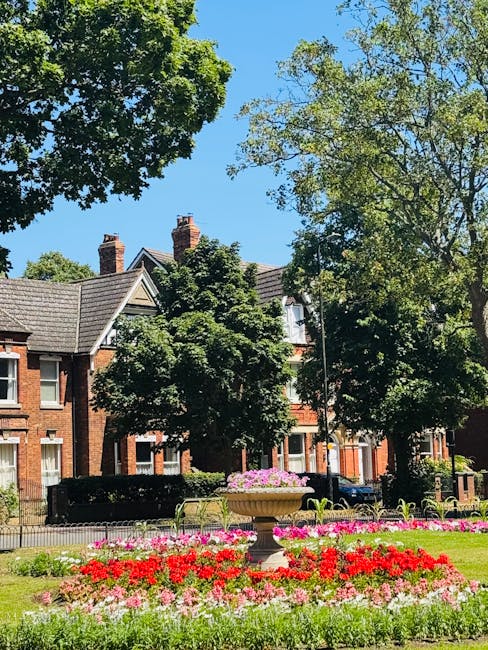
Gardeners Romford guide to Raphael Park front gardens
Front gardens around Raphael Park have a particular kind of pressure to them. They sit close to one of Romford's most recognisable green spaces, so they need to look welcoming, feel tidy through the seasons, and still cope with everyday life: foot traffic, parking, shade, wind, and the occasional stretch of weather that seems to change its mind three times before lunch. This Gardeners Romford guide to Raphael Park front gardens is designed to help you shape a front space that looks good, works hard, and does not become a weekly headache.
Whether your front plot is a narrow strip, a small paved approach, or a more generous garden boundary, the same principles apply: clarity, structure, low-fuss planting, and a design that fits the house rather than fighting it. You will find practical advice here on layout, planting, maintenance, and the small details that make a front garden feel finished instead of merely "done". And yes, a front garden can be both neat and characterful. It does not have to be one or the other.
If you are thinking about a refresh rather than a full rebuild, this is also a good place to explore related ideas on regular garden maintenance, lawn care, and professional landscaping support that can bring an older frontage back into shape without overcomplicating things.
Table of Contents
- Why Raphael Park front gardens matter
- How front-garden planning works in practice
- Key benefits and practical advantages
- Who this is for and when it makes sense
- Step-by-step guidance
- Expert tips for better results
- Common mistakes to avoid
- Tools, resources and recommendations
- Law, compliance, standards, or best practice
- Options, methods, or comparison table
- Case study or real-world example
- Practical checklist
- Conclusion
- Frequently asked questions
Why Gardeners Romford guide to Raphael Park front gardens Matters
A front garden is often the first thing people notice, but that is only part of the story. In the Raphael Park area, many homes benefit from a strong visual connection to the street: neat edges, healthy planting, and a clear path from pavement to front door make a place feel cared for before anyone even steps inside. That matters for day-to-day pride, not just for appearance.
Front gardens also play a practical role. They can soften hard surfaces, reduce the "all driveway, all the time" look, and improve drainage when designed sensibly. A well-planned front can also create privacy without turning the property into a bunker. To be fair, that balance is where many gardens go wrong. They are either too exposed or too enclosed. The sweet spot is somewhere in the middle.
There is also a local reality here: Roman Road-style paving, older brick fronts, modest plots, and mature streets often need sympathetic treatment. A good front-garden plan should sit comfortably with the house, the neighbours, and the wider character of the street. If it feels like it belongs, it usually works better over the long run.
Expert summary: the best Raphael Park front gardens are rarely the most complicated ones. They are the ones with a clear structure, a manageable plant palette, and a maintenance plan that fits real life, not fantasy life.
How Gardeners Romford guide to Raphael Park front gardens Works
Think of a front garden in three layers: structure, planting, and upkeep. If those three are aligned, the space tends to stay tidy and attractive with less effort. If even one layer is ignored, the whole thing can start to feel slightly wobbly. A clipped hedge with a weedy border looks unfinished. A neat path surrounded by thirsty plants can feel high-maintenance. A beautiful planting scheme with no access plan becomes awkward fast.
First comes structure. That means paths, edging, boundaries, hard surfaces, bins, parking access, and sight lines. In many front gardens near Raphael Park, the structural work is what creates instant calm. A crisp border or a repaired edge can do more than a dozen extra plants. Small thing, big difference.
Then comes planting. For front gardens, planting should usually earn its place. You want a mix of year-round presence and seasonal interest. Low, durable plants near paths. Taller planting only where it will not block visibility or crowd the front door. If you want to soften the ground without constant weeding, it is worth looking at ground cover plants that help keep borders under control and, if you want more inspiration, these highly effective ground cover ideas for UK gardens.
Finally, upkeep. A front garden must be easy to maintain or it will not stay attractive for long. That means choosing plants that fit the light level, using mulch or dense planting to reduce weeds, and setting a simple routine for clipping, sweeping, and checking for tired growth. It does not have to be fancy. It just has to happen.
Key Benefits and Practical Advantages
Good front gardens do more than look pretty in spring. They improve the way a property functions all year round. Here are the main benefits homeowners usually notice first.
- Better kerb appeal: a front garden frames the house and makes the entrance feel intentional.
- Less day-to-day mess: structured planting and edging reduce weeds, stray soil, and uncontrolled growth.
- Improved privacy: thoughtful hedging or screening can soften views from the street without making the space dark.
- More usable space: a front plot can accommodate storage, access, seating, or planting if planned well.
- Lower stress: a manageable layout is easier to sweep, water, trim, and keep neat.
- Better seasonal resilience: the right plants handle cold snaps, wind, and wet spells more gracefully.
There is a quieter benefit too. A tidy front garden changes how you feel when you come home. You notice it on a rainy evening when the path still looks clear and the planting still has shape, even if the weather has been rude all week. That matters more than people admit.
If privacy is part of your brief, you may also want to look at hedges that help create a private retreat and professional hedge trimming in Romford to keep the line sharp rather than shaggy.
Who This Is For and When It Makes Sense
This guide is for homeowners, landlords, and property managers who want a front garden that is attractive without becoming demanding. It is especially useful if you have one of the following situations:
- a front garden that feels bare and unwelcoming
- an overgrown space that has drifted over time
- a driveway or path that needs to work better with planting
- too many weeds and not enough structure
- shade from trees, fences, or neighbouring buildings
- strong wind exposure in an open street-facing plot
- a desire for low-maintenance planting rather than a "show garden"
It also makes sense if you are trying to balance different priorities. Maybe you want space for bins and access, but you also want the house to feel softer from the street. Maybe you have children or a dog. Maybe you simply do not want to spend every Saturday morning fighting bindweed. Fair enough, really.
For families, the front garden should be safe and legible. A useful starting point is a child-friendly landscape approach, even if you only adapt a few ideas. For dog owners, the planning logic overlaps with garden retreat ideas for people and pets, because the same principles of durability and clear routes apply.
Step-by-Step Guidance
1. Start with the entrance line
Stand at the pavement and look at what a visitor sees first. Where does the eye go? Is the path obvious? Are the planting edges broken, muddy, or overcrowded? The front line of a garden does a lot of the heavy lifting, so begin there. A simple sweep and edge refinement can reveal more potential than you might expect.
2. Map the sunlight and shade
Front gardens near mature trees or taller houses often have patchy light. Do not guess. Watch it for a day if you can, or at least morning versus late afternoon. Shade-tolerant planting works brilliantly in some spaces, while other plots need sun-lovers that stay compact. If you skip this step, you risk buying plants that sulk. Plants do that. They can be dramatic.
3. Decide what should stay open
Keep windows, thresholds, and paths relatively open. Good front gardens usually have breathing room around the entrance. That does not mean empty. It means space where movement happens. Put dense planting to the sides, not where people will constantly brush past it with shopping bags or umbrellas.
4. Choose a small, repeatable planting palette
Resist the urge to cram in every nice-looking plant you have seen in a catalog or on a Saturday wander. A few repeating species usually look smarter. Repetition calms the eye. It also makes maintenance simpler, which is a blessing in January when the garden is more "grey with intent" than glamorous.
5. Use ground cover and mulch intelligently
Low planting layers are your best friend in a front garden. They suppress weeds, soften hard lines, and give a more finished appearance. If you want practical ideas for tough spots, low-maintenance planting ideas can help you think beyond bare soil. For weed pressure, it is also worth studying weed control techniques that actually reduce repeat work.
6. Add structure with hedging, edging, or containment
Well-chosen hedging gives shape and softness at the same time. Edging gives definition. Containers add flexibility if the soil is awkward or the space is narrow. If you need inspiration for smart, controlled greenery, container gardening can be both stylish and practical, especially in smaller front plots.
7. Finish with a routine you can keep
All the design skill in the world will not help if the space is never revisited. Set a simple maintenance rhythm: quick weekly checks, monthly tidy-ups, and a seasonal reset. That is usually enough for a front garden to stay sharp without becoming a burden.
Expert Tips for Better Results
Here is the part where small choices make a surprisingly big difference.
- Match scale to the house. A tiny house front can be overwhelmed by chunky planting, while a larger frontage can look lost if the design is too timid.
- Keep the front boundary clean. If the edge near the pavement is rough, the whole garden can feel untended even when the rest is fine.
- Design for winter, not just summer. A front garden spends a lot of the year without flowers. Use evergreens, textured leaves, stems, or structure that still looks decent in colder months.
- Choose plants that forgive mistakes. The best front-garden plants are usually the ones that tolerate missed watering, patchy soil, and the odd cold snap.
- Use vertical elements sparingly. A trellis, climber, or upright shrub can add height, but too much can crowd the entrance.
If your frontage faces weather exposure, you may also find guidance on high-wind garden management useful, along with weather protection tips for vulnerable planting. That sort of planning pays off when the first rough spell arrives and other gardens start looking flattened.
One practical trick: do a five-minute "doorstep test". Walk out, close the front door, and see whether the space still feels balanced from where you actually live with it. Not from a design magazine angle. From your own life. That is the real test.
Common Mistakes to Avoid
Front gardens can go wrong in very predictable ways. Luckily, most of them are easy to avoid once you know what to look for.
- Overplanting: too many plants make the space noisy and harder to maintain.
- Ignoring access: if bins, bikes, gates, or paths are awkward, the garden will feel messy fast.
- Choosing thirsty plants for dry spots: they will struggle unless you water constantly.
- Leaving bare soil exposed: bare patches invite weeds and look unfinished.
- Using hedging without a trimming plan: a hedge left to its own devices can become a liability.
- Blocking sight lines: especially near steps, driveways, and corners, this can be risky and inconvenient.
- Forgetting seasonal change: a garden that looks good in June but dull in November is only half planned.
Another common one? Buying plants because they looked beautiful in a pot on a sunny day, then wondering why they do not thrive in your actual front garden. Happens all the time. Reality has a way of doing that.
Tools, Resources and Recommendations
You do not need a van full of equipment to improve a front garden, but the right basic tools make a tidy result much easier to maintain. A solid starting set usually includes:
- sharp secateurs
- garden snips or small shears
- a border fork or hand fork
- a hoe or weeding tool
- a stiff broom for paths and paving
- gloves that actually fit properly
- a watering can or hose setup suitable for the space
- mulch or compost for soil improvement
For a broader overview of kit, essential outdoor gardening equipment is a useful companion read. If you are clearing an existing plot, starting a garden renovation with confidence can help you sequence the work properly, and turning garden waste into better soil is a smart way to think about reuse rather than constant disposal.
For many Raphael Park front gardens, the best "resource" is really a plan. A sketch, a rough list of priorities, and a maintenance schedule can save more money than impulsive buying. Not glamorous, but true.
Law, Compliance, Standards, or Best Practice
Front gardens are not normally about heavy regulation, but there are a few common-sense standards worth following. If you are altering access, edging, fencing, tree growth, or any feature close to the pavement, think carefully about safety, visibility, and neighbour impact. Good practice in residential garden work usually means keeping entrances clear, avoiding trip hazards, and making sure new features do not obstruct movement or sight lines.
If your project involves trees, larger hedges, or boundary changes, it is wise to proceed cautiously and seek informed help where needed. Tree work and structural garden changes can have practical and legal implications depending on the situation. For that reason, services such as tree surgery, fencing, and health and safety policy guidance matter more than many people realise.
If you are hiring help, clarity around expectations is just good practice. That includes understanding terms and conditions, checking payment and security, and knowing how complaints are handled through the complaints procedure. It is not about being fussy. It is about avoiding awkward conversations later.
For many homeowners, the reassurance of proper insurance and safety information is part of choosing a contractor at all. And if you want to understand how a company handles its responsibilities more broadly, about us and privacy policy pages are also useful signals of professionalism.
Options, Methods, or Comparison Table
Different front gardens need different approaches. A simple comparison helps narrow the right method without overthinking it.
| Method | Best for | Pros | Watch-outs |
|---|---|---|---|
| Low-maintenance planting | Busy households and smaller plots | Easy upkeep, cleaner look, less weed pressure | Can feel plain if structure is weak |
| Hedging and screening | Privacy and soft boundaries | Natural feel, year-round shape, good street presence | Needs trimming and enough space |
| Container-led design | Patios, paved fronts, awkward soils | Flexible, easy to refresh, visually neat | More watering and seasonal replacement |
| Mixed border with edging | Traditional house fronts | Warm, layered, established appearance | Can become weedy without a good maintenance routine |
| Hardscape-led frontage | Driveway-heavy plots | Practical, tidy, low mud transfer | Needs planting softened in carefully chosen places |
In many Raphael Park settings, the strongest option is a blend. A driveway might need hard surfaces for practicality, but a softened edge with evergreen shrubs, mulch, and a few reliable perennials can stop it from feeling too stark. A little balance goes a long way.
Case Study or Real-World Example
Here is a realistic example from the kind of frontage we often see in Romford: a modest terraced house with a narrow front garden, a path to the door, and a strip of tired border that had become mostly weeds and patchy soil. The owners wanted it to look smarter without turning into a big maintenance job. Sensible ask, honestly.
The starting point was simple. The front edge was cleaned up, old clutter removed, and the remaining soil improved with compost and a protective surface layer. A small hedge line was used to define the boundary, while the main planting moved to compact evergreen shrubs and low ground cover. A couple of containers by the entrance added height without blocking access. Nothing overblown. Just a clear plan.
By the end, the house felt more settled from the street. The path was easier to walk. Weeds were less aggressive. The entrance looked intentional rather than accidental. And the owners said the biggest change was not the flowers. It was the fact that the space now felt easy. That is the real win with front gardens: ease first, beauty second, although the two do tend to arrive together if you are patient.
If you are planning a similar refresh, it can help to start with a broader gardening services approach rather than trying to fix everything at once. Sometimes the smartest move is to simplify, then build back up.
Practical Checklist
Use this quick checklist before you begin work on a Raphael Park front garden:
- Have I measured the available space accurately?
- Do I know where the sun, shade, and wind are strongest?
- Is access to the front door clear and safe?
- Have I chosen plants that fit the soil and light conditions?
- Do I have enough structure to make the garden look finished in winter?
- Will this design be easy to maintain month after month?
- Have I allowed space for bins, parking, or day-to-day movement?
- Do I need hedge, tree, fence, or hardscape support?
- Is weed control planned, not just hoped for?
- Have I checked any service terms, safety details, or budget expectations?
If you can answer "yes" to most of those, you are in good shape. If not, that is fine too. Better to notice now than six weeks after planting.
Conclusion
The best front gardens near Raphael Park are not the most crowded or the most expensive. They are the ones that feel calm, well judged, and easy to live with. A good structure, a sensible planting scheme, and a realistic maintenance plan can turn even a small or awkward frontage into something quietly impressive.
Start with what the garden needs to do, not just how you want it to look. If it needs privacy, give it privacy. If it needs openness, keep it open. If it needs less work, design for less work. That simple shift changes everything, and it often saves money as well.
For homeowners who want a more tailored approach, the most useful next step is a conversation about the space, the conditions, and what you actually want from the front of the property. Small changes can make a bigger difference than you might expect, especially when they are done properly.
Get a free quote today and see how much you can save.
And if you are standing at the gate wondering where to begin, begin with one clear edge, one honest plant choice, and one small improvement. That is often enough to get the whole place moving in the right direction.
Frequently Asked Questions
What makes Raphael Park front gardens different from other Romford front gardens?
They often need to balance character, visibility, and everyday practicality. In many cases, the best results come from simple layouts that suit the house and the street rather than trying to force a dramatic design into a small space.
What are the easiest plants to maintain in a front garden?
Low-maintenance shrubs, durable ground cover, and compact evergreens are usually a good starting point. The right choice depends on sunlight, soil, and how much time you want to spend on watering and trimming.
How do I stop weeds coming back in a front border?
Good weed control usually starts with removing existing roots, improving the soil, adding coverage such as dense planting or mulch, and keeping up with regular checks. A one-off tidy rarely solves it on its own.
Can I make a front garden look good without spending a lot?
Yes. Clear edging, a handful of reliable plants, reused containers, and a tidy maintenance routine can improve a front garden significantly. Often, tidiness and structure matter more than expensive materials.
Should I use hedges or fences for privacy?
Both can work. Hedges feel softer and more natural, while fencing gives a sharper boundary and can suit modern layouts. Many front gardens use a mix, which is often the most balanced answer.
How often should a front garden be maintained?
Most front gardens benefit from light weekly attention and a more thorough tidy every few weeks. Seasonal pruning, weeding, and mulching help keep the space from sliding into disorder.
What should I do if my front garden is mostly shade?
Choose shade-tolerant planting, avoid forcing sun-loving species into the space, and use structure like edging or containers to give the garden shape. Shade is not a problem if you plan for it.
Is container gardening a good idea for front gardens?
Very often, yes. Containers are useful where soil is poor, space is tight, or you want flexibility. They do need more watering, but they can look sharp and are easy to update through the year.
Do I need professional help for a small front garden?
Not always, but professional help can save time if the space has drainage issues, overgrown hedges, awkward boundaries, or a layout that needs proper reshaping. A small garden can still be technically tricky.
What is the biggest mistake people make with front gardens?
Usually it is ignoring maintenance. A front garden has to work in real life, so if the design is too complicated for the time available, it will quickly lose its shape and stop looking cared for.
Can front garden work improve kerb appeal straight away?
Yes. Even simple changes like cutting back overgrowth, improving the entrance line, and refreshing borders can make an immediate difference. You often notice it the same day, which is rather satisfying.
How do I get started if my front garden feels overwhelming?
Start by clearing, then measure, then decide what must stay and what can go. After that, focus on structure before planting. If you want help, a conversation with a local gardener can make the whole thing feel much less daunting.
If you would like to talk through your ideas, you can get in touch with the team here and discuss the front garden you want to create.